
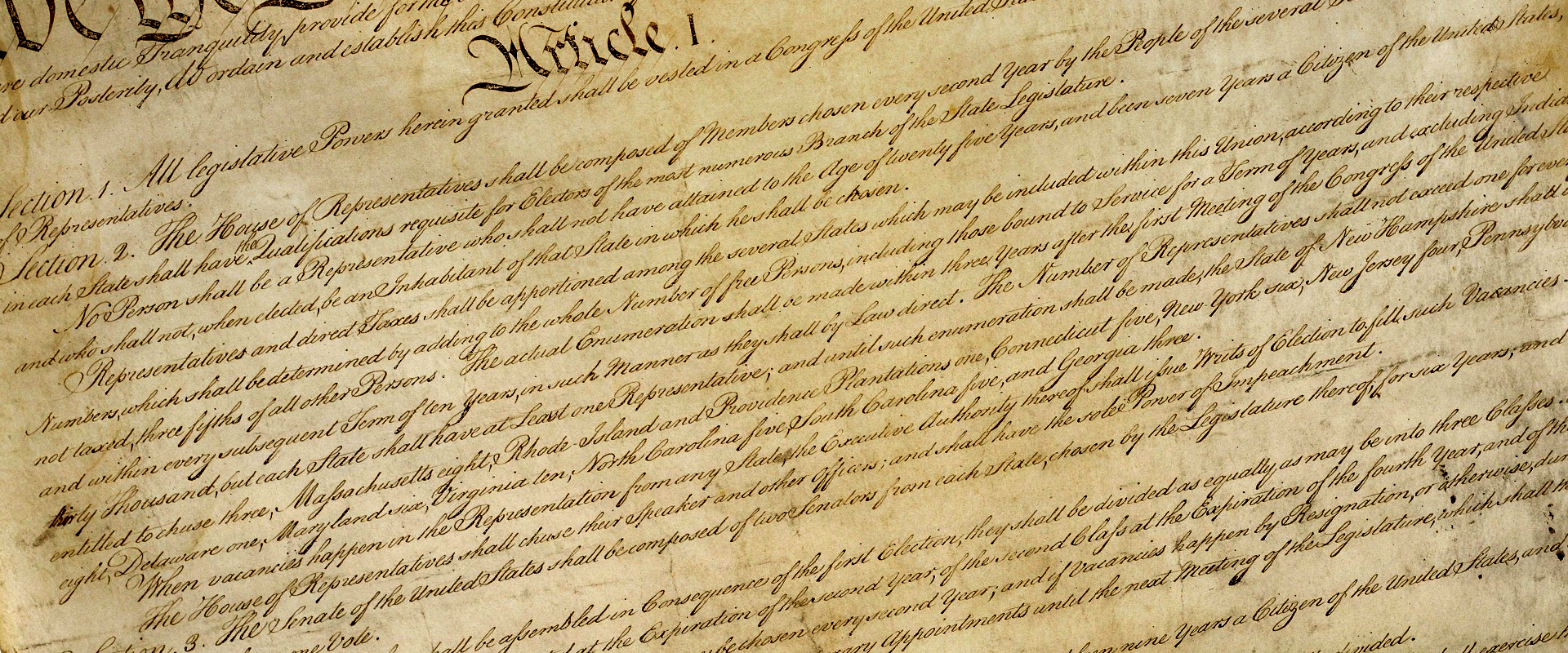
Was the U.S. Constitution originally designed to be revised and updated over time?
Confidence as of July 13, 2026
5 claims2 open questions
Our take
The Constitution was designed to be amendable but it is tougher than passing a law.
Why we say this
U.S. Constitution, 1788
Article V sets the procedures by which the Constitution may be amended.
Madison, Federalist 43, 1788
The amendment process should be neither wholly unalterable nor too easy.
National Archives, 1992
The Twenty-seventh Amendment was ratified May 7, 1992; none since.
This is not a claim of absolute truth. Read the whole story for more context.
as of July 13, 2026
This story tracks whether the U.S. Constitution was intentionally designed to allow future generations to revise and update the nation's governing framework. The question concerns the original constitutional design, the historical record from the Constitutional Convention, and the ratification debates—not whether amendments are politically desirable today.
Where things stand
The Constitution explicitly includes an amendment process in Article V, and records from the Constitutional Convention and the ratification debates indicate that the Framers intentionally rejected making the Constitution either impossible or too easy to change. Historical use of that process has been uneven: twelve amendments were ratified by 1804, while the most recent—the Twenty-seventh—was ratified in 1992, with none since. Historical debate continues over how frequently the Constitution should be amended and how broadly existing provisions should be interpreted, but there is little dispute that the document was deliberately written to permit future revision.
Soon you'll be able to follow a story and get notified when the evidence changes.
Confidence
as of July 13, 2026The strongest evidence comes from the Constitution itself, particularly Article V, along with records of the Constitutional Convention and the Federalist Papers. These primary artifacts consistently describe amendment as an intentional feature that balances stability with the ability to respond to changing circumstances. They do not establish that the Framers expected frequent revision or that every modern policy issue requires constitutional amendment. The ratification record reinforces that point: amendment activity was concentrated early (twelve amendments by 1804) and has been rare in recent decades—none since the Twenty-seventh Amendment in 1992.
This is our best read given the published evidence we have reviewed — not a claim of absolute truth.
Open questions
How broadly did individual Framers expect future generations to use the amendment process?
Different delegates expressed different views about the appropriate frequency and scope of constitutional change.
To what extent should constitutional adaptation occur through amendments versus judicial interpretation?
Judicial interpretation can adapt constitutional meaning without Article V, but it is reversible when Court composition or doctrine changes. Whether that flexibility is a feature or a risk—including debates over Court size and appointments—is outside what the original design alone settles.
What would change our mind
- Discovery of previously unknown primary historical records demonstrating that Article V was intended only for technical corrections rather than substantive constitutional change.
- New historical scholarship based on previously unavailable Convention records materially changing the understanding of Article V's purpose.
Timeline — How we got here
5 updates · append-onlyStable for nowEvidence review: original design remains stable
Review of the primary record finds no post-1992 artifact that changes the design question: Article V intentionally allows amendment, and the Twenty-seventh Amendment remains the last ratification on the official list.
Claims & evidence
Each claim is tracked separately — not a single verdict.The Constitution, as originally ratified in 1788, includes a formal process for future amendments in Article V.
Evidence basis- June 21, 1788The Constitution of the United States
Article V establishes procedures by which the Constitution may be amended.
Records from the Constitutional Convention indicate that delegates intentionally included an amendment mechanism rather than making the Constitution permanently fixed.
Evidence basis- James Madison's Notes of Debates in the Federal Convention of 1787
Convention debates include discussion of creating a constitutional amendment process.
- June 21, 1788The Constitution of the United States
The final Constitution contains the amendment mechanism adopted by the Convention.
Federalist No. 43 describes the amendment process as balancing constitutional stability with the ability to correct errors.
Evidence basis- The Federalist Papers: Federalist No. 43
Madison argues that the Constitution should neither be wholly unalterable nor too easily changed.
The most recent amendment to the Constitution, the Twenty-seventh Amendment, was ratified on May 7, 1992; none have been ratified since.
Evidence basis- May 7, 1992The Constitution: Amendments 11-27
Amendment XXVII: Originally proposed Sept. 25, 1789. Ratified May 7, 1992.
Twelve amendments were ratified within roughly the first fifteen years after the Constitution took effect (by 1804), while none have been ratified in the most recent fifteen years.
Evidence basis- December 15, 1791The Bill of Rights: A Transcription
These amendments were ratified December 15, 1791, and form what is known as the "Bill of Rights."
- June 15, 1804The Constitution: Amendments 11-27
Amendment XI ratified February 7, 1795; Amendment XII ratified June 15, 1804; Amendment XXVII ratified May 7, 1992.
What this doesn’t establish
Claims commonly associated with this story that the available evidence does not establish. Confirming a narrow fact here is not confirmation of the broader narrative around it. As such, these claims are not included in the claims bar above.
The Framers expected the Constitution to be routinely rewritten to reflect changing public opinion.
Evidence basis- The Federalist Papers: Federalist No. 43
The primary text argues for an amendment process but does not establish that frequent constitutional revision was expected.
Because the Constitution includes an amendment process, any future constitutional amendment necessarily reflects the original intentions of the Framers.
Evidence basis- June 21, 1788The Constitution of the United States
Article V establishes how amendments may be adopted but does not determine the substantive merit of future amendments.
Help improve this story
Point us at a source, a mistake, or a framing problem. Every submission is reviewed by a human before anything changes — this is not a vote on what’s true.
Confidence last reviewed July 13, 2026. Updates are append-only; nothing here is edited silently.
Soon you'll be able to follow a story and get notified when the evidence changes.