Stories
Loading 35 stories…

Loading 35 stories…
Developing and retrospective topics where the evidence has shifted — or keeps shifting — over time. Search, sort, and filter to find a story; each page shows our current read, the claims behind it, and how that understanding has changed.
This story tracks the historical evidence regarding the causes of the American Civil War. The evidence relies primarily on contemporaneous primary documents—including secession ordinances, declarations of causes, speeches, constitutions, and official government records—along with modern historical scholarship. Because many political, constitutional, and economic issues were debated before the war, this story distinguishes between immediate causes, underlying causes, and broader political narratives.
4 claims tracked
It is commonly claimed that either Democratic or Republican presidents are consistently better for working- and middle-class Americans. The evidence is more nuanced than campaign rhetoric suggests. Academic research has found that several broad macroeconomic measures—including GDP growth, unemployment, and income outcomes for lower-income households—have historically been stronger under Democratic presidents on average. Researchers disagree about how much of that pattern should be attributed to presidential policy, as opposed to inherited conditions, oil and productivity shocks, and other factors outside the White House.
6 claims tracked
Public debate has frequently asserted either that critical race theory (CRT) was widespread in elementary and secondary education or that it was entirely absent. The available evidence points to a more nuanced picture: CRT originated as a legal academic framework and is not part of standard K–12 curricula nationwide, while some educators or districts have used materials influenced by CRT or referenced its concepts. This story tracks the evidence for the prevalence of CRT in K–12 education rather than broader political narratives.
5 claims tracked
Each month, the headline U.S. jobs number leads the news — then quietly gets revised as more data arrive. In February 2026, annual benchmark revisions cut 2025’s job growth by more than 400,000, leaving just ~181,000 jobs added for the entire year — the clearest recent case of how far a first-reported picture can move. Monthly 2026 prints keep shifting after release; the next large checkpoint is BLS’s preliminary 2026 benchmark on August 28.
4 claims tracked
This story tracks what constitutional scholarship, legal history, and judicial interpretation establish about the original public meaning of the Second Amendment. The debate centers on whether the Amendment should be understood primarily through the historical context of late-18th century militia institutions or as expressing a broader constitutional principle that extends to future developments in firearms and individual self-defense. The available evidence consists of founding-era documents, historical scholarship, Supreme Court opinions, and academic research. No single historical artifact resolves the interpretive dispute, and scholarly disagreement remains substantial.
6 claims tracked
This story tracks the evidence regarding claims that routine childhood vaccines cause autism spectrum disorder. The question became widely public after a 1998 Lancet paper that was later retracted. Subsequent epidemiological studies, systematic reviews, and official health agency assessments have extensively examined the claim.
3 claims tracked
This story tracks the evidence comparing criminal offending and incarceration rates among immigrants and U.S.-born Americans. The evidence includes peer-reviewed research, government crime statistics, census data, and official analyses. Because "crime rate" can refer to arrests, convictions, incarceration, self-reported crime, or victimization — and because immigrants include both lawful and unauthorized immigrants — claims are evaluated separately where possible.
4 claims tracked
This story tracks the empirical evidence behind the claim commonly associated with "trickle-down economics": that reducing taxes on corporations and high-income earners produces measurable economic growth, higher employment, and broader gains for the general population. The evidence base consists primarily of peer-reviewed research, international organization working papers, and cross-country datasets. While there is broad agreement that tax policy influences investment incentives, there is continuing debate over the size, consistency, and distribution of any resulting economic gains.
4 claims tracked
This story tracks what public health surveillance, peer-reviewed medical research, and official statistics establish about abortions performed at or after 21 weeks of gestation in the United States. The evidence addresses two separate questions: (1) how frequently these abortions occur, and (2) what medical and non-medical factors are documented as contributing reasons. National surveillance reliably measures frequency but does not comprehensively record patients' reasons, leaving important evidence gaps.
3 claims tracked
This story tracks what the biblical texts themselves state regarding marriage and same-sex sexual relationships, while distinguishing those texts from later religious interpretation. Biblical quotations use the New American Standard Bible (NASB). The evidence also includes scholarly research on historical and linguistic context. Because the Bible does not name modern civil same-sex marriage as an institution, and because biblical marital practice includes arrangements beyond lifelong monogamy, contemporary appeals to a single "biblical definition of marriage" involve interpretation rather than a one-to-one mapping from text to modern law.
4 claims tracked
This story tracks the scientific evidence behind the widely repeated claim that humans use only 10% of their brains. The evidence consists primarily of neuroscience research, medical imaging, clinical observations, and educational resources from scientific and medical organizations. The goal is to distinguish what is well established from popular misconceptions and legitimate open questions about brain function.
2 claims tracked
This story tracks the evidence linking social media use to mental health outcomes among adolescents. The evidence includes advisory reports, peer-reviewed epidemiological studies, and experimental and quasi-experimental research. Because "social media" encompasses many platforms and use patterns, claims are separated where possible by outcome, age group, and study design.
7 claims tracked
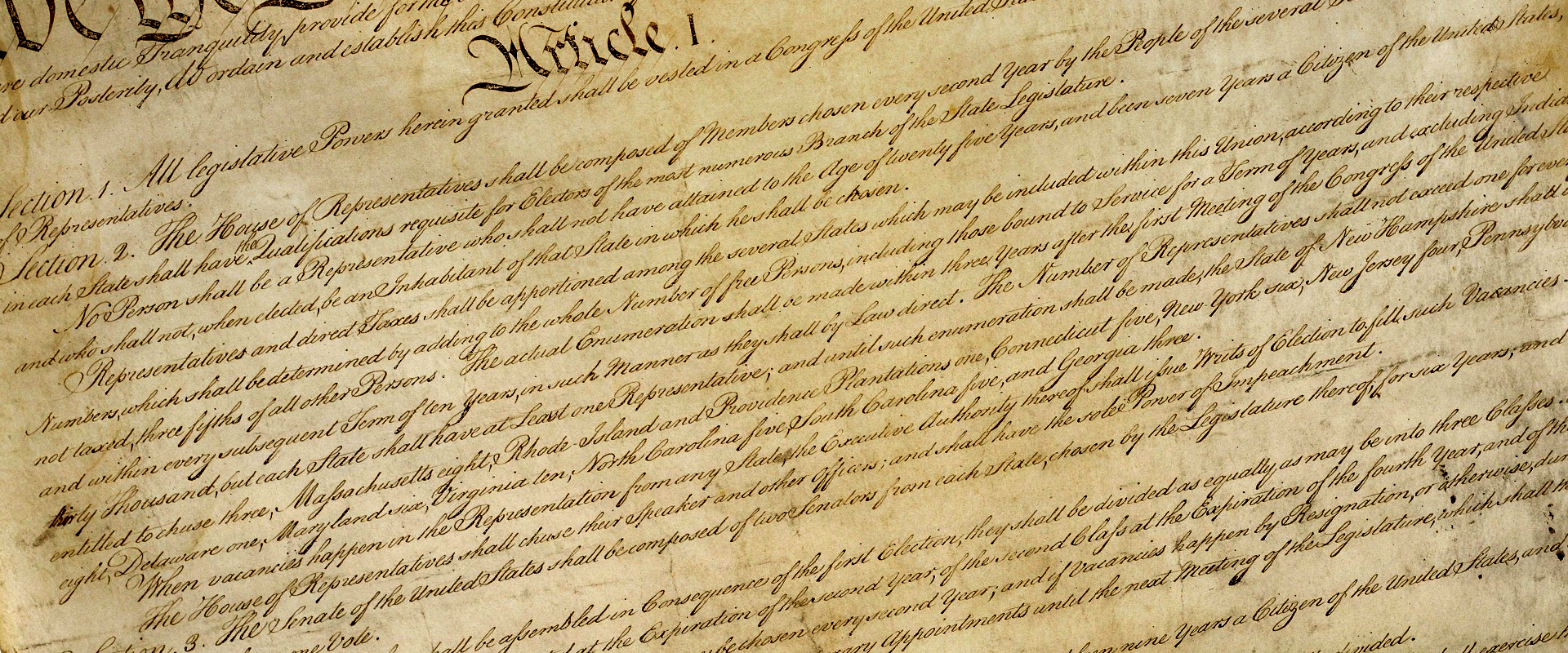
This story tracks whether the U.S. Constitution was intentionally designed to allow future generations to revise and update the nation's governing framework. The question concerns the original constitutional design, the historical record from the Constitutional Convention, and the ratification debates—not whether amendments are politically desirable today.
5 claims tracked
For generations, people associated catching colds with cold weather, wet hair, and winter exposure. Modern virology and epidemiology established that colds are caused by viruses — especially rhinoviruses — while research on whether cold exposure affects susceptibility has produced more limited and mixed findings. This retrospective story traces a familiar misconception and what the evidence actually establishes.
3 claims tracked
This story tracks specific, testable claims about a laptop publicly attributed to Hunter Biden and the evidence supporting those claims. The subject has generated numerous factual claims, counterclaims, and political narratives. This intake distinguishes between claims supported by primary artifacts, claims corroborated by multiple independent sources, and claims that remain unverified or disputed.
4 claims tracked
Since the rollout of mRNA COVID-19 vaccines, one of the most persistent claims has been that the vaccines change or integrate into a person's DNA. This story tracks what the evidence actually shows. While laboratory studies have explored isolated molecular mechanisms under artificial conditions, multiple lines of evidence indicate that the vaccines do not alter recipients' genomic DNA under normal clinical use.
5 claims tracked
Six years into the pandemic, most people have immunity from prior infection, vaccination, or both — so the real question is what the latest booster adds on top of that. New 2026 studies converge on a meaningful but modest reduction in hospitalization and urgent care, largest for older and higher-risk adults, and waning over months. Whether it’s “worth it” depends a lot on who you are.
4 claims tracked
This story tracks evidence about whether replacing or substantially expanding the current U.S. health insurance system with a universal health care system would reduce costs for the average American. Because "universal health care" encompasses many different policy designs, the evidence distinguishes between broad international comparisons, economic modeling of specific proposals, and observed outcomes in countries with universal coverage. The story focuses on primary research, government data, peer-reviewed studies, and official budget analyses rather than political arguments.
3 claims tracked
This story tracks evidence on whether increasing renewable electricity generation threatens or improves grid reliability. The question depends on grid design, storage, transmission, weather patterns, and how reliability is measured. We track official grid assessments and peer-reviewed energy system studies rather than general advocacy claims. Note: Rising AI and data-center electricity demand is out of scope here: it is a general load-growth pressure that would affect reliability planning across all generation types, not a renewables-specific question.
3 claims tracked
This story asks whether wages and household incomes have kept pace with the cost of major middle-class necessities — especially housing, health care, and higher education — across generations. That is the lived affordability question for most people, not whether every price in the economy rose or whether overall purchasing power against a broad consumption basket improved. Related claims about broad real incomes and a uniform rise in overall inflation-adjusted cost of living are tracked separately below; they answer different questions.
9 claims tracked
Wind and solar power are frequently the subject of claims about reliability, cost, and whether they can replace "baseload" generation. Many of these claims mix established engineering constraints with broader conclusions that are not directly supported by the underlying evidence. This story tracks what primary technical reports establish, what remains contested, and what common inferences go beyond the available evidence.
4 claims tracked
This story tracks what primary scientific, intelligence, and official public health assessments establish about the origin of SARS-CoV-2. The question is not whether a natural zoonotic spillover occurred in principle — it has for many viruses — but whether current evidence identifies a specific origin pathway and whether a laboratory-associated release can be ruled in or out. We track primary artifacts separately from political commentary.
6 claims tracked
This story tracks the evidence regarding whether prenatal exposure to acetaminophen (the active ingredient in Tylenol) causes autism spectrum disorder. The question has received substantial public attention due to observational epidemiology studies, professional medical guidance, and litigation. We track what primary research, official guidance, and court proceedings establish separately.
3 claims tracked
Reports linking Ozempic (semaglutide) and other GLP-1 drugs (formally, GLP-1 receptor agonists) to blindness have drawn widespread attention. The current evidence does not establish that these drugs cause blindness, but several observational studies have reported an association with non-arteritic anterior ischemic optic neuropathy (NAION), a rare form of sudden optic nerve injury. Separately, semaglutide has a longer-standing warning about diabetic retinopathy complications — a different eye problem that public discussion sometimes conflates with NAION. We are tracking whether accumulating evidence supports a causal relationship between GLP-1 drugs and NAION, or whether the observed association is explained by underlying risk factors such as diabetes and vascular disease.
6 claims tracked
This story tracks a narrow question: whether official state audits, recounts, or legislative investigations documented fraud at a scale that would have changed any state's certified 2020 presidential outcome. It does not address every allegation about the election, every local irregularity, or nationwide prevalence of fraud.
7 claims tracked
This story tracks empirical evidence on whether raising minimum wages reduces employment, hours, or business survival. The evidence consists of natural experiments, cross-state comparisons, systematic reviews, and official budget analyses. Effects likely differ by magnitude of increase, local labor market conditions, and which workers or industries are studied.
4 claims tracked
This story tracks empirical evidence on whether firearm ownership or keeping a gun in the home reduces or increases the risk of injury or death to household members. The question concerns population-level associations in observational research, not individual cases or constitutional questions about gun ownership rights.
4 claims tracked
This story tracks the scientific evidence regarding community water fluoridation, including its effects on dental health and potential health risks. The focus is on primary scientific evidence, systematic reviews, government risk assessments, and official public health recommendations rather than opinion pieces or advocacy. Evidence is evaluated separately for established findings, unresolved questions, and broader claims commonly attached to the topic.
4 claims tracked
This story tracks the evidence regarding medical interventions sometimes described as gender-affirming care for minors, including puberty blockers, hormone therapy, and surgery. The evidence base includes clinical guidelines, systematic reviews, observational studies, and official health-system reviews. Medical, ethical, and legal questions are evaluated separately where possible.
10 claims tracked
This story tracks the evidence comparing the safety of aspartame and sugar when consumed in comparable amounts. The comparison is complicated because aspartame is hundreds of times sweeter than sugar, meaning equivalent sweetness requires much smaller quantities of aspartame. We therefore distinguish evidence about the safety of each substance itself from evidence about typical dietary exposure and health outcomes.
4 claims tracked
This story tracks the evidence used to separate natural climate variability from human-driven climate change. Natural climate cycles exist and are routinely included in attribution work, but the assessed evidence concludes they cannot explain observed global warming since the mid-20th century on their own. We track primary scientific assessments, observational datasets, and attribution studies rather than commentary about them.
4 claims tracked
This story tracks evidence for claims that large-scale voter fraud has occurred in U.S. elections. The focus is on primary artifacts such as court filings, official election audits, government investigations, and documented prosecutions rather than commentary or political rhetoric.
2 claims tracked
This story tracks the scientific evidence regarding male circumcision, including potential medical benefits, risks, and areas of scientific disagreement. The evidence consists primarily of systematic reviews, randomized controlled trials, peer-reviewed research, and official guidance from medical organizations. Because circumcision is performed for medical, religious, cultural, and personal reasons, this story evaluates health claims separately from ethical or religious arguments.
4 claims tracked
This story tracks what official government records, declassified documents, and historical studies establish about the CIA's Office of Scientific Intelligence (OSI) and Project MKUltra. Although the two are sometimes discussed together in popular literature, they were distinct programs with different missions and organizational roles. The strongest evidence comes from declassified CIA records, congressional investigations, National Archives collections, and official historical publications.
4 claims tracked
For most of the 20th century, peptic ulcers were blamed on stress and excess stomach acid. Beginning in 1982, two researchers in Perth argued the real culprit was a bacterium, Helicobacter pylori. The idea was dismissed for years — then became medical consensus, and a Nobel Prize.
5 claims tracked
Think we’re missing a story? Point us at a subject, claim, or developing story worth tracking.
Submit a story idea